
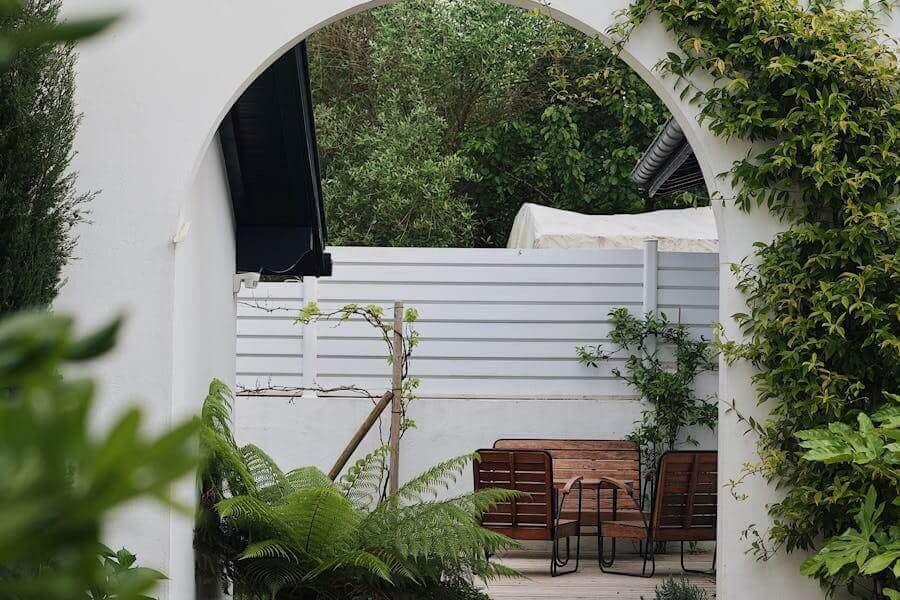
Privacy changes how a garden feels. Even a well-designed outdoor space can feel exposed if it’s overlooked or too open. It becomes somewhere you pass through, rather than somewhere you settle into.
Creating a sense of privacy doesn’t require building walls or completely closing off the space. In many cases, small adjustments—how you arrange seating, where you place plants, how you define boundaries—can make a noticeable difference.
TIP: Don’t over do it. This may feel counter-intuitive. But think about it: the goal of privacy is comfort, not isolation. Which means that your garden privacy ideas must do a balancing act. Too much privacy is just that: too much.
Start With Where Privacy Matters Most
Not every part of the garden needs to feel enclosed. Instead, focus on the areas where you spend the most time. Typically, those are your seating areas, your dining spaces, but don’t forget your quiet corners — places further in your garden where you may have create a birdwatching nook or a garden bench.
Creating privacy in these zones has the biggest impact, even if the rest of the garden remains more open.
Garden Privacy Ideas That Use Natural Screening
Many garden privacy ideas focus on layering rather than blocking views completely.
Plants are one of the most effective ways to introduce privacy without making the space feel closed in. They can soften the boundaries, allowing you to also create zones or ‘rooms’ in your garden, naturally. Most importantly, they filter views rather than blocking them completely – which is completely fine in most cases. Overall they create a much more natural, relaxed atmosphere than any man-made material can do.
Think of these as options for your project to make your garden feel more private:
- hedging – these are obvious choices. There are many plants you can choose from for a hedge.
- tall grasses – less obvious, but a more contemporary, drought-proof choice. Again, there are many grass types to choose from.
- layered planting – the likely choice of landscape designers, as this can result in better privacy and a more beautiful garden year round.
This approach feels less rigid than solid structures and often blends more naturally into the garden.
Position Seating Away From Direct Views
Sometimes privacy isn’t about adding more—it’s about repositioning what’s already there. If your seating faces directly towards neighbouring properties or open sightlines, it can feel exposed.
Simple adjustments would mean that you turn your seating slightly, move it closer to a boundary such as a fence, wall or a hedge. Or you place it beside planting. Even small shifts can change how private the space feels.
If you’re refining your layout, these outdoor seating ideas show how placement affects comfort and usability.
Introduce Simple Screens or Dividers
Screens offer a more defined way to create separation. They don’t need to cover the entire boundary—partial screening is often enough. You might use:
- wooden panels – trellis or classic garden enclosure panels
- slatted dividers – those contemporary wooden slate dividers that allow people to peek through between the slates, but that gives both a modern vibe to your garden.
- lightweight structures – think of bamboo dividers of various thicknesses.
The key is to break up direct lines of sight rather than completely block them.
Now, wind will be a factor when considering what type of screens to use, and whether to use screen at all. If you are living in a windy area, you will want the screen to also provide wind protection. And be so durable that it won’t tip over, spoiling your outdoor tea party.
Layer Your Privacy
Privacy works best when it’s built in layers rather than relying on a single solution. For example, here’s what you’d do:
- Add plants at one level
- Place a screen at another
- And then use your furniture placement adding a third layer.
Voilà. This creates depth and makes the space feel more considered. And this is also more practical as the sun moves around during the day. In garden design, layering is often what turns a functional space into one that feels specially designed that way.
Use Height Carefully
Adding height can improve privacy, but it needs to feel balanced. Too much vertical structure can make a space feel enclosed or heavy. Instead do this to achieve the desired effect:
- Simply vary heights of your plants, or panels
- Keep some openness between plants, panels and/or other structures
- Avoid creating a solid wall effect. That could feel isolating instead.
A mix of heights helps maintain both privacy and light.
Create a More Enclosed Seating Area
Defining a seating area more clearly can make it feel naturally more private. This might involve placing seating between planting, using a corner or boundary or adding subtle structure around it. When a space feels slightly enclosed, it becomes more comfortable to use.
If you’re working with limited space, these small garden ideas that feel bigger and more relaxed show how enclosure and openness can be balanced.
Reduce Visual Clutter Around Boundaries
Busy or cluttered boundaries can make a space feel more exposed. Simplifying edges helps create a calmer backdrop.
- remove unnecessary items
- keep planting structured
- avoid mixing too many elements
A clearer boundary often feels more private, even without additional screening.
Combine Privacy With Low Maintenance
Privacy features shouldn’t add unnecessary upkeep. Choosing low-maintenance options helps ensure the space stays manageable.
You might want to mix up hardy plants, such as boxwood or bushy shrubs with simple structures like a wooden panel or a bench back. Use durable materials to add structural elements.
If you want to keep upkeep minimal, these low-maintenance garden ideas that still look beautiful show how to design a space that remains easy to care for.
Avoid Over-Blocking the Space
It’s easy to go too far when trying to create privacy. Be careful. Fully blocking a garden can reduce light. This would mean less flowers in your garden and a slower growth of plants. Some may even die off if full sun is required for them.
Over-blocking and also make the space feel smaller, which is typically undesirable. And last, it can be isolating, if it’s all removing the connection to the surrounding. The aim is to feel comfortable—not cut off.
Bringing Privacy Into Everyday Use
A private garden is one you naturally want to spend time in. When you feel less exposed:
- you relax more easily
- you stay outside longer
- the space becomes part of daily life
Privacy isn’t just a design feature—it’s what makes a garden feel usable.
Conclusion
Creating privacy in a garden doesn’t require major changes. Often, it comes down to a few thoughtful adjustments—where you place seating, how you use planting, and how you define the space around you.
When those elements come together, the garden begins to feel calmer, more comfortable, and more your own.